Leading Beyond the Principal’s Office
NC Principal of the Year Network
Don’t ask Patrick Greene, principal of Greene Central High School* in Snow Hill, NC, about school dress codes.
“I hate them!” he says with a laugh.
But ask him about the things that really matter — creating opportunity for students, building a school culture where teachers want to stay, helping young people find their passion — and he lights up.
In just six years, Patrick led Greene Central out of low-performing status and into the top 10% statewide for student growth, earning the school NC’s prestigious Model STEM School designation.
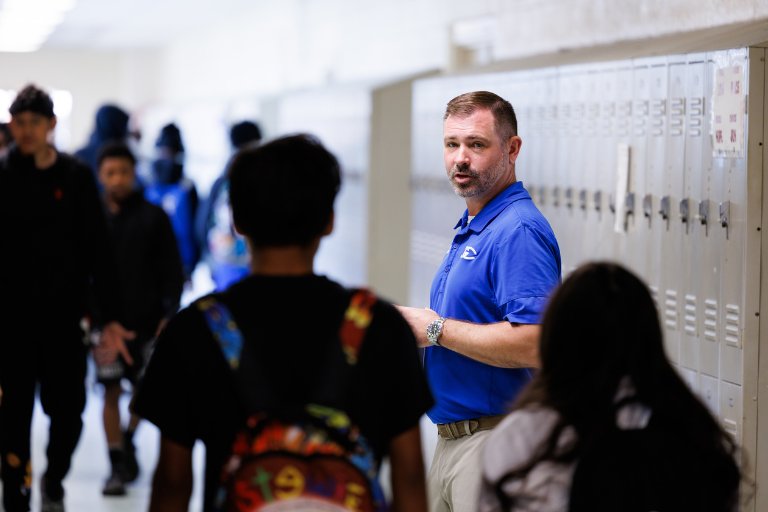
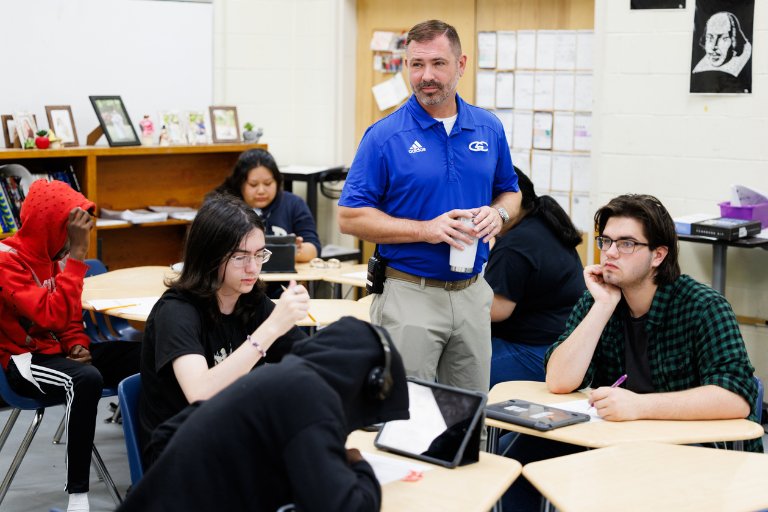
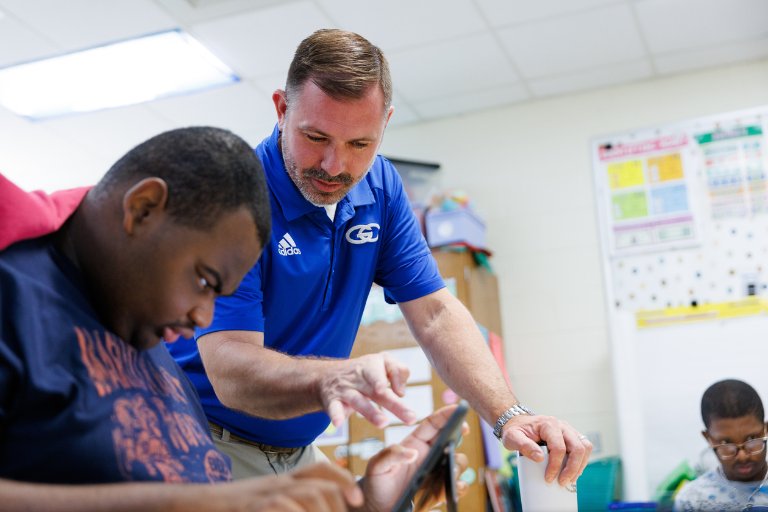
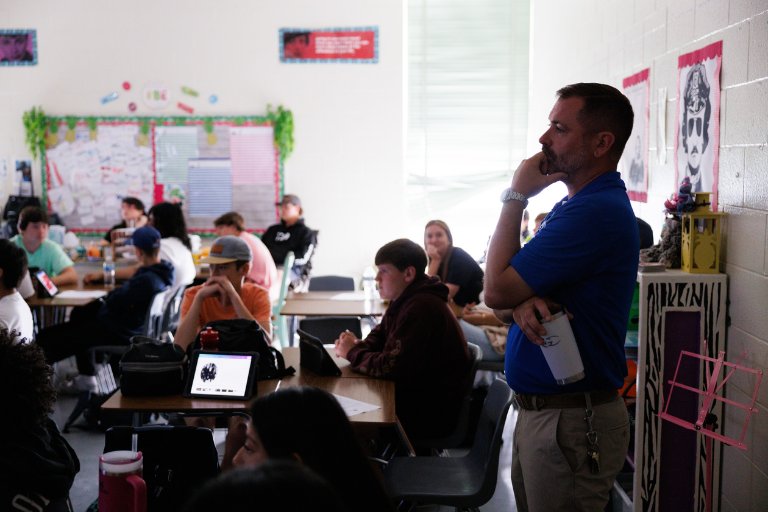
On a typical day, Principal Patrick Greene spends time with students, observes classes, and supports teachers. Photos by Cornell Watson.
A few hours west in Mooresville, Principal Carrie Tulbert asks elementary schoolers to take a “no-pick pledge,” a commitment not to pick their noses, before heading down the hall to a glow-stick math party.
The energy at Carrie’s school, Lakeshore STEM Elementary School, is joyful and intentional. Though Carrie is new to Lakeshore, she’s in her 15th year as a principal, and she is an expert at building school cultures where teachers feel supported, families feel connected, and kids are excited to learn.
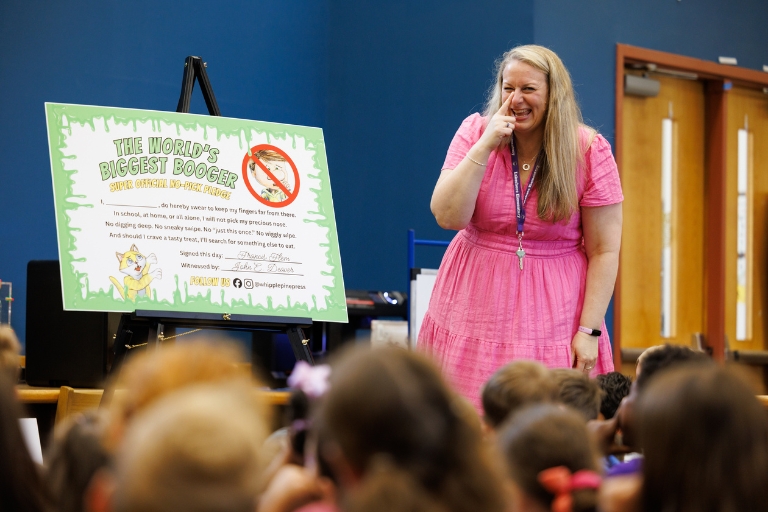
At Lakeshore STEM Elementary in Mooresville, Principal Carrie Tulbert fosters a culture of support, connection and joy. Photos by Cornell Watson.

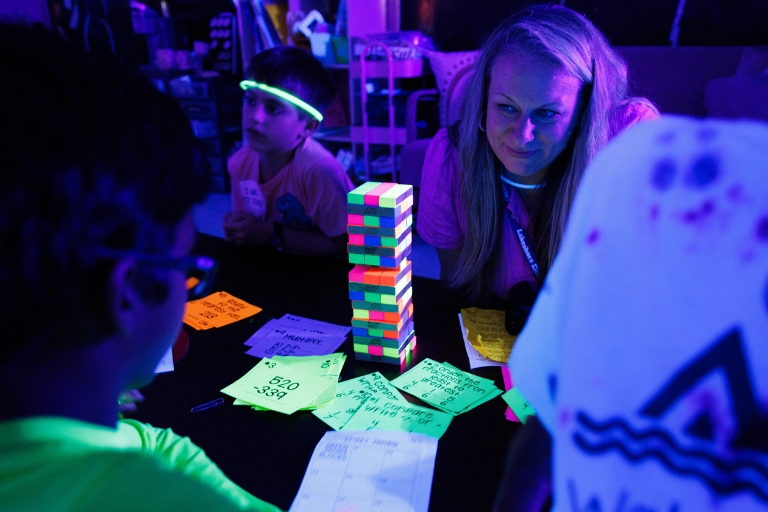
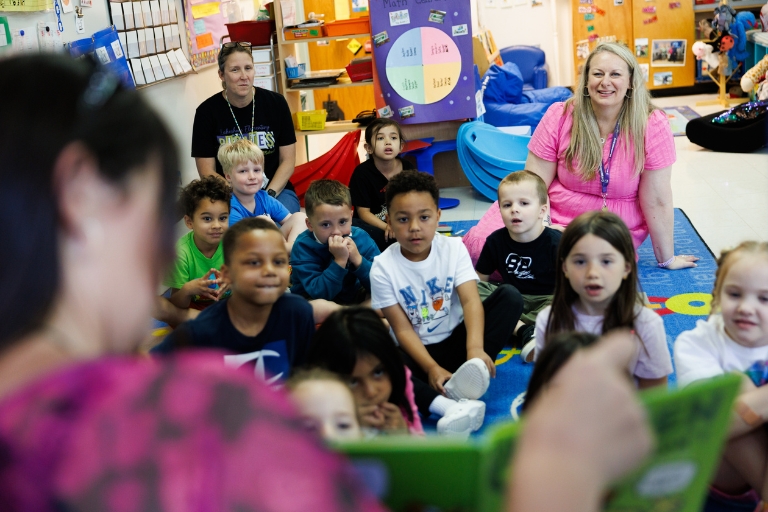
Patrick and Carrie are at different schools in different towns, and they lead with different styles. But they share something important: both were named North Carolina Principal of the Year.
And today, they are part of the NC Principal of the Year Network, a growing community of school leaders using their voice and expertise to champion and strengthen NC’s local public schools.
A Platform for Service and Advocacy
Being named Principal of the Year by the NC Department of Public Instruction (DPI) is an enormous honor and comes with several perks.
Chief among them is the opportunity to serve as an advisor to the State Board of Education, the body who makes policies and decisions that affect thousands of principals and more than a million students.
Patrick recalls, “At the first state board meeting I attended, they were resetting the way principal salaries were done. There were 400 principals statewide who had led their schools through COVID, and those leaders were set to take a pay cut based on student data. So of course I had to open my mouth. I explained to the board: these principals have mortgages, they’re putting their kids through college, and they’ve just led their schools through a traumatic time. Cutting their pay is unfair.”
Patrick found that his perspective was valuable to decision-makers. They not only heard him out but asked him to serve on several working groups and committees, including one that partnered with DPI to come up with a better principal pay solution.
Patrick embraced this new role. “I’m a strong believer that when leaders put faces to policies, they understand impacts on people,” he says.
“When leaders put faces to policies, they understand impacts on people.”
– Patrick Greene, Co-Founder, NC Principal of the Year Network
Carrie experienced something similar during her year of service.
“Having primarily worked in the Charlotte area, for me to go to Camden County and learn about their challenges with teacher recruitment, and how they have to compete with Virginia, or to understand the challenges school leaders are facing in Rutherford County, all of this made me a better advocate,” she says.
The experience gave both leaders a broader understanding of the opportunities and challenges facing public schools across North Carolina and a desire to keep contributing.
But once their formal Principal of the Year service ended, so did the official platform that connected them to statewide advocacy and policy discussions.
In speaking with other former Principals of the Year, Patrick realized many felt the same way: they wanted to continue serving as advocates for public school students, teachers, and leaders across North Carolina at a time when public education faced growing challenges and needed experienced voices at the table.
So in 2023, former Principals of the Year gathered in Asheville for a retreat to explore what it might look like to stay connected and engaged beyond their formal year of service. That’s how the NC Principal of the Year Network was born.
Today, the growing initiative brings together current and former Principals of the Year to market the success stories of public education, strengthen principal leadership and retention, and advocate for public schools and school leaders across North Carolina.
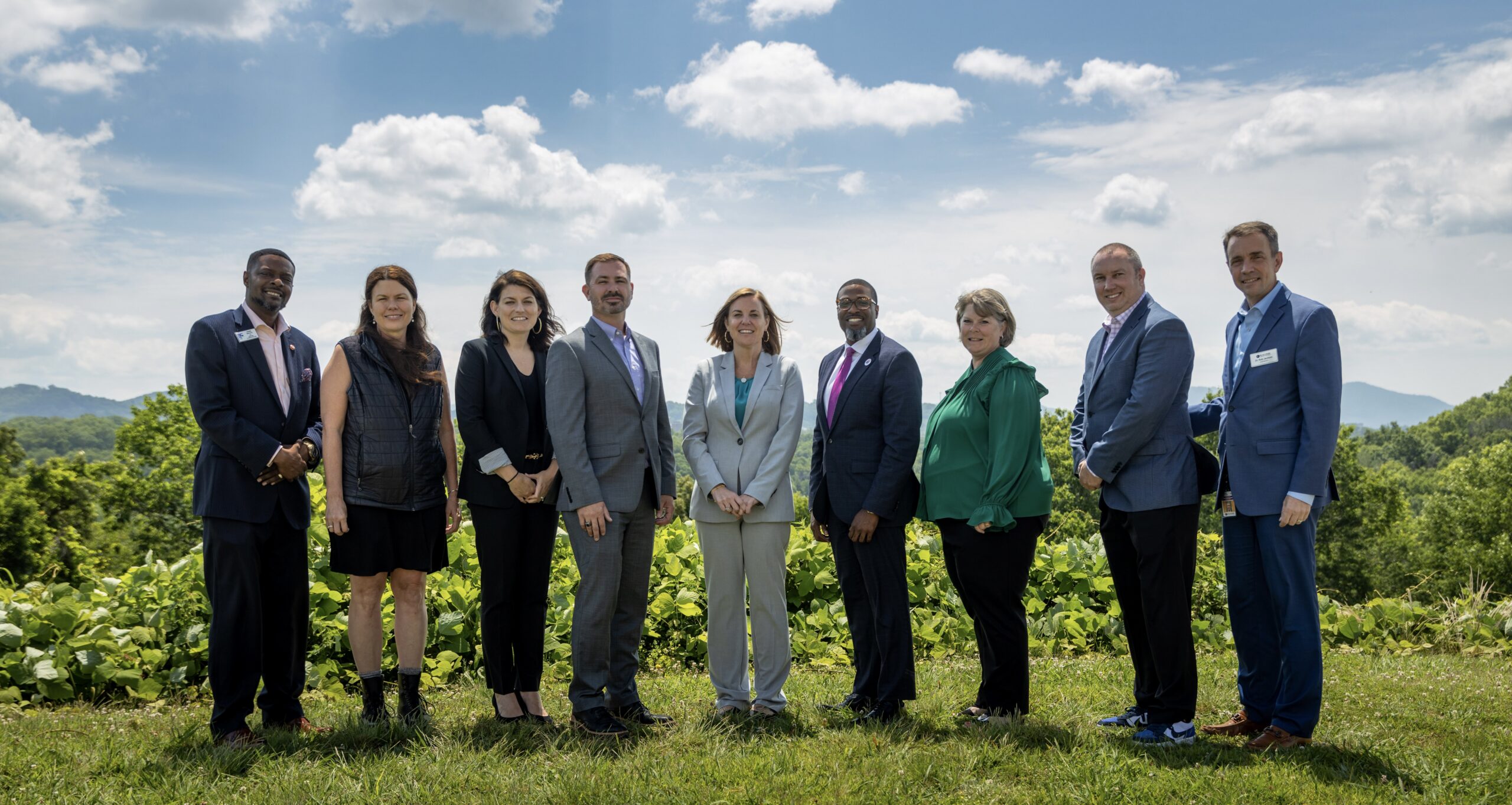
A Collective Voice for Public Education
In February 2026, dozens of school leaders gather in Arapahoe, a quiet, rural town in Pamlico County, for a daylong learning session on leadership with the NC Principal of the Year Network.
The attendees are engaged and excited to learn from the eight former Principals of the Year who are leading the session. The group has already covered how to lead with courage, ignite instructional excellence, and take care of your well-being. Now, the topic is “pathways to partnership,” and Patrick is preaching.
“School choice isn’t going away,” he says. “We need to learn how to market our schools to our families and communities.”
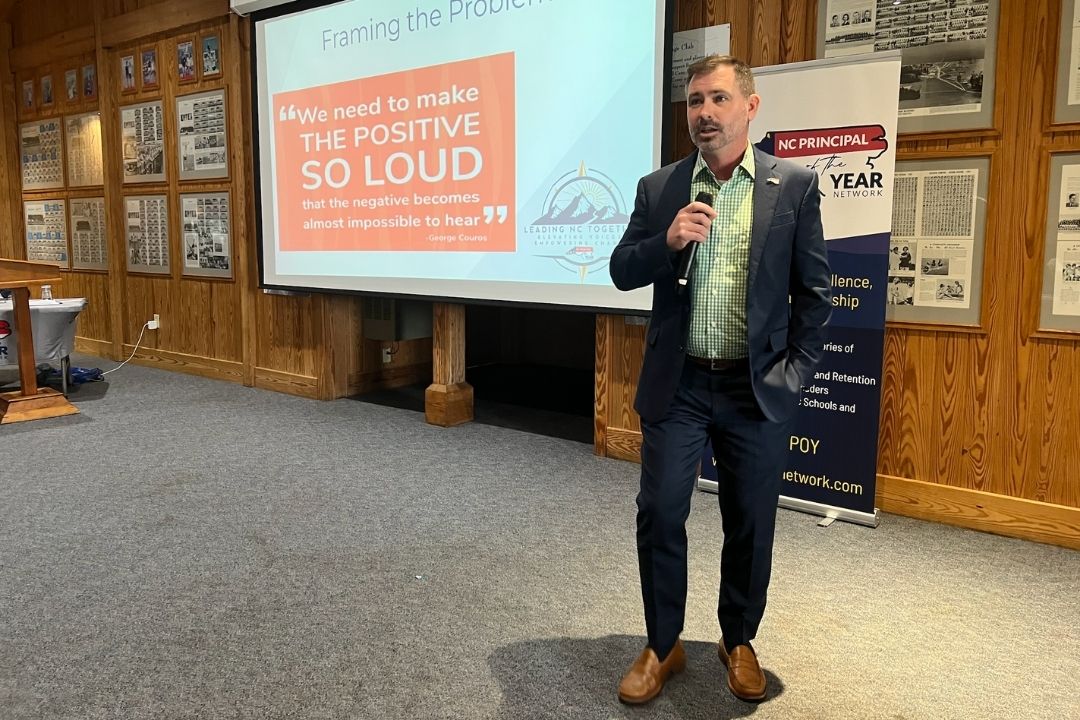
Decades ago, North Carolina’s public schools didn’t need marketing. NC’s leaders invested in resources and reforms to ensure every child in our state had access to an excellent public education. The system wasn’t perfect, but almost all NC families sent their kids to public school. (For details on NC’s public education history, check out North Carolina’s Choice byEducationNC.)
But in today’s era of “school choice,” marketing is a necessity.
When parents sign up their kids for kindergarten today, they’re faced with myriad choices: traditional public schools; magnet schools, which are public but offer specialized programs; charter schools, which are publicly funded but operate independently; and private schools, where tuition is now subsidized even for NC’s wealthiest families through the state’s “Opportunity Scholarship” program.
“Those private and charter schools have whole marketing teams,” Patrick tells the school leaders in Arapahoe.
Because of NC’s public school funding model, when families choose charter or private schools over their local public school, the public school system loses funding, and that has negative repercussions across communities and the state.
Patrick is quick to point out that most students in NC — 84% as of July 2025 — attend public school, but it’s on public school leaders and advocates to communicate why public schools are still the best choice.
“Amazing things are happening in our schools,” he says, “but that’s not what makes the news. If we don’t tell our story, then somebody else will.”
“If we don’t tell our story, then somebody else will.”
– Patrick Greene, Co-Founder, NC Principal of the Year Network
Patrick is a great model for how to do this. He describes how at Greene Central High School, where he is principal, they offer hands-on technical classes in addition to advanced academics.
This combination of courses is invaluable for students, Patrick explains. “If you want to be an engineer, you also have to know how electrical wiring works. You can get all of that at Greene Central.”
The Network’s work extends beyond helping principals communicate with families. It also seeks to ensure that policymakers understand the realities facing students, educators, and schools.
“Education should be purple,” Patrick says. “No matter how you vote, you want your kid to have a great school. You want your kid to have an awesome teacher. You want your kid to be safe.”
He continues: “I don’t think decision-makers wake up and rub their hands together and say, ‘Ooh, I’m ready to dismantle public education today!’ I think they have a different point of view based on their experience. So we’ve done a lot of storytelling to humanize what they’re doing — when you pass this law or this policy, these are the people it affects and how it affects them.”
Carrie agrees. “We want to educate decision-makers about the positive realities of what’s happening in our schools today, so our schools can be funded more appropriately, and our state will see the continued positive repercussions of that.”
Supported Leaders, Better Schools, Better System
In addition to promoting positive stories of public education, the Network is also quietly tackling one of the most urgent challenges facing North Carolina schools: keeping highly effective school leaders in the job.
“Supporting principals is one of the most overlooked levers for strengthening public schools,” Patrick says. “Research shows kids’ access to a high-quality teacher is the number one factor that makes them successful. Number two is their principal.”
But public school leaders need more support to be able to serve every student. The Network aims to meet those needs by providing group learning opportunities for principals and advocating for solutions that would allow principals to thrive in their roles long-term.
The Network has convened public school principals in communities across North Carolina, from Cherokee in the far west to Arapahoe in the far east. These gatherings create opportunities for school leaders to connect, learn from one another, and build the relationships needed to sustain them in a demanding profession.
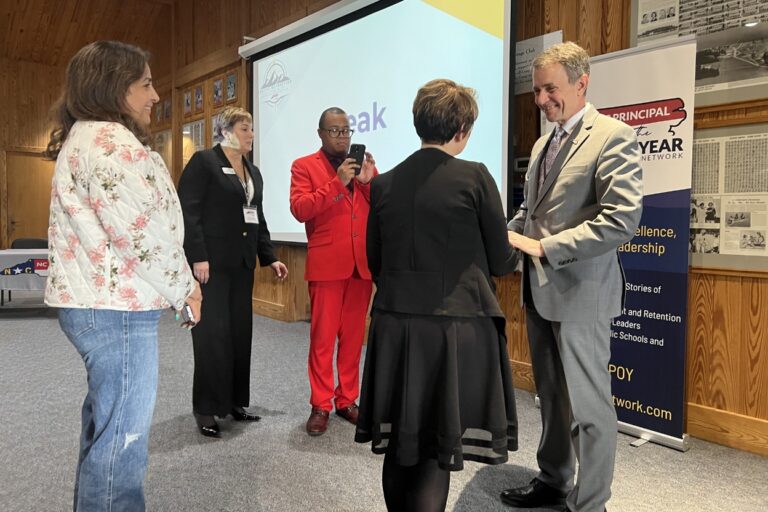
At a Network event in Arapahoe, school leaders greet Dr. Rob Jackson, superintendent of Buncombe County Schools. Photo by Katie Fogleman.
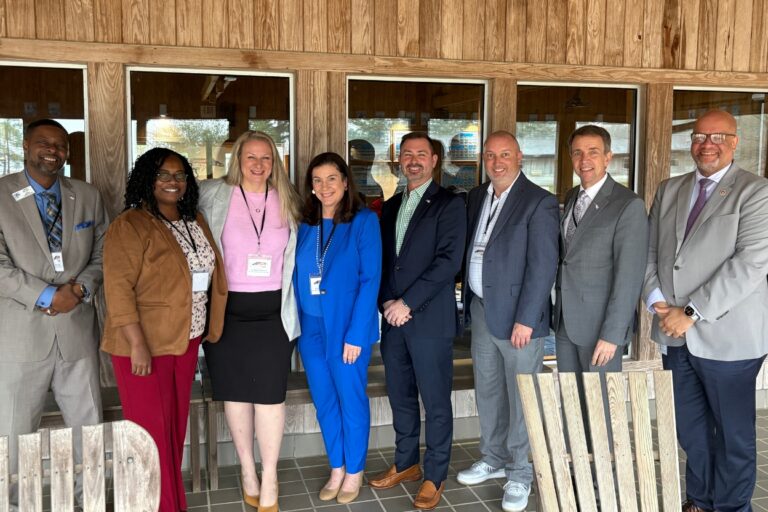
Former NC Principals of the Year and current Network members in Arapahoe. Photo: Elizabeth Santamour.
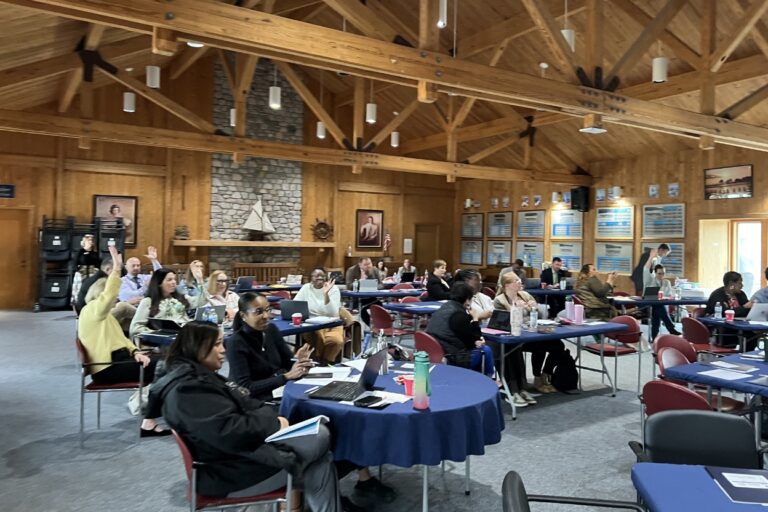
In February 2026, dozens of school leaders gathered in Arapahoe to learn from the NC Principals of the Year Network. Photo by Katie Fogleman.
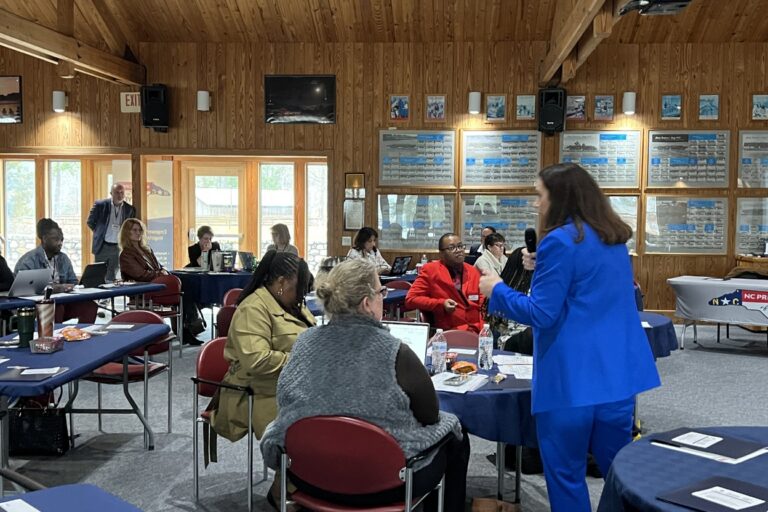
Beckie Spears (right), 2024 NC Principal of the Year, presents on igniting instructional excellence. Photo by Katie Fogleman.
On the advocacy front, Patrick reports that the Network has been busy trying to ensure that NC is not just the #1 state for business but the #1 state for education — “so people want to continue to do business here,” he says.
One concrete solution from the Network is a highly researched Principal Working Conditions Survey, which would complement the Teacher Working Conditions Survey. The teacher survey is often cited as a key piece of data to understand how schools are functioning, and the principal survey would add critical context and illuminate ways NC can better support school leaders.
On the policy front, the Network is also advocating to ensure principal pay is determined in a fair and equitable way, and that the NC state budget includes adequate funding for public schools that would cover support staff, teacher pay raises, mental health counselors and more.
“We look to schools for so many things,” Patrick says. “We need a state budget that reflects that.”
Staying at the Table
For Carrie, the Network is ultimately about service.
“When I was Principal of the Year, I had a platform to serve the state in a different way,” she says. “When that year ends, your commitment to students, teachers, and public education doesn’t end. The Network gives us a way to continue that work together.”
That work takes many forms. Sometimes it means helping principals build stronger school cultures. Sometimes it means sharing the successes of public schools with families and policymakers. Sometimes it means advocating for the resources educators need to do their jobs well.
But at its core, the goal is simple: ensuring that every North Carolina student has access to a great public school.
“When we’re advocating for public education, we’re really advocating for the future of our communities,” Carrie says. “The experiences students have in our schools shape everything that comes after. If we can help school leaders thrive, the ripple effects extend far beyond any one building.”
For Patrick, that’s why the Network matters.
“The title of Principal of the Year lasts for a year,” he says. “The responsibility to serve doesn’t.”
 English
  Español