Saving and Sharing Black History in Appalachia
Mary C. Jenkins Community and Cultural Center
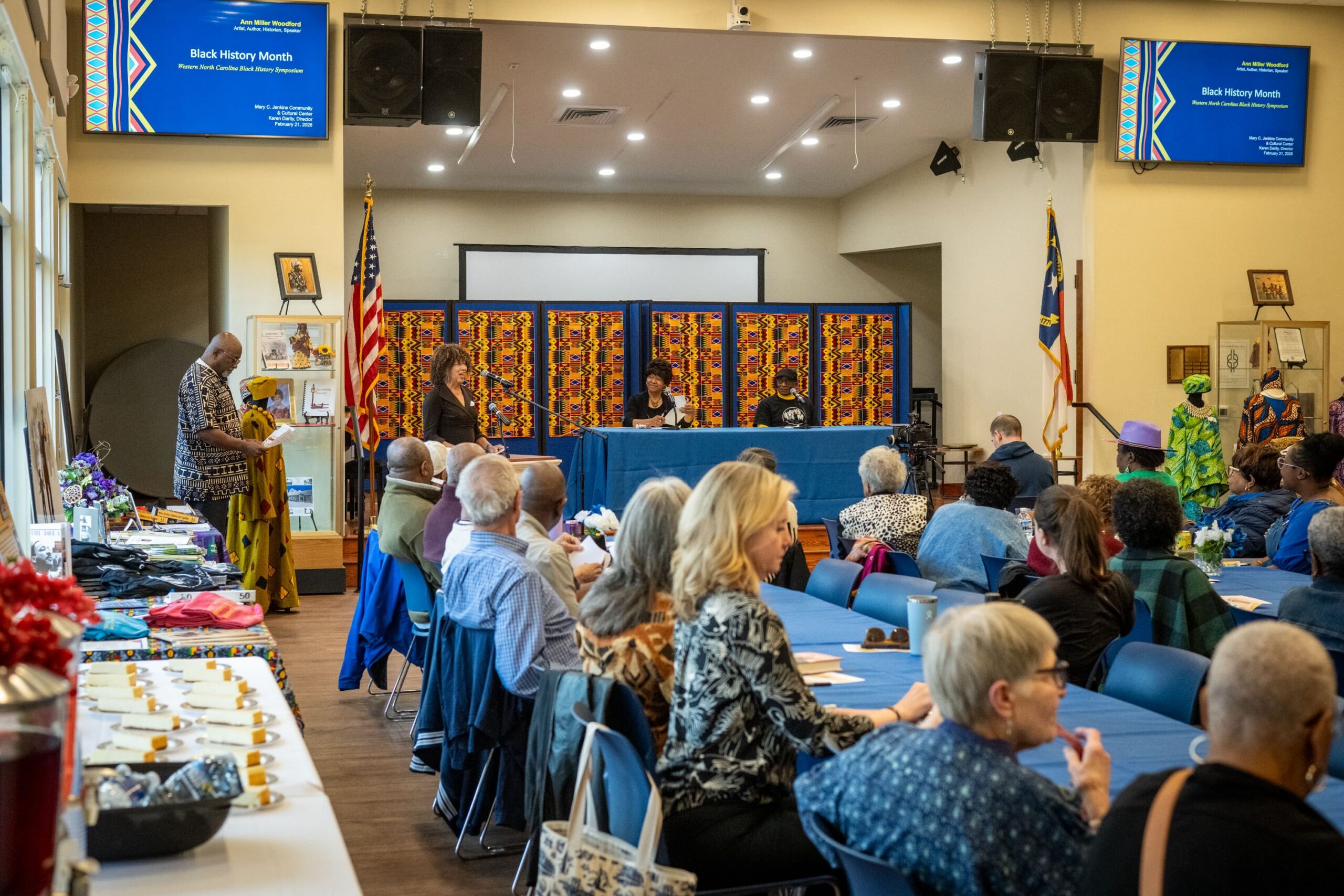
On a chilly Saturday during Black History Month, the Mary C. Jenkins Community and Cultural Center hums with life.
Representatives from five western North Carolina counties have gathered to share and experience history together over food and fellowship.
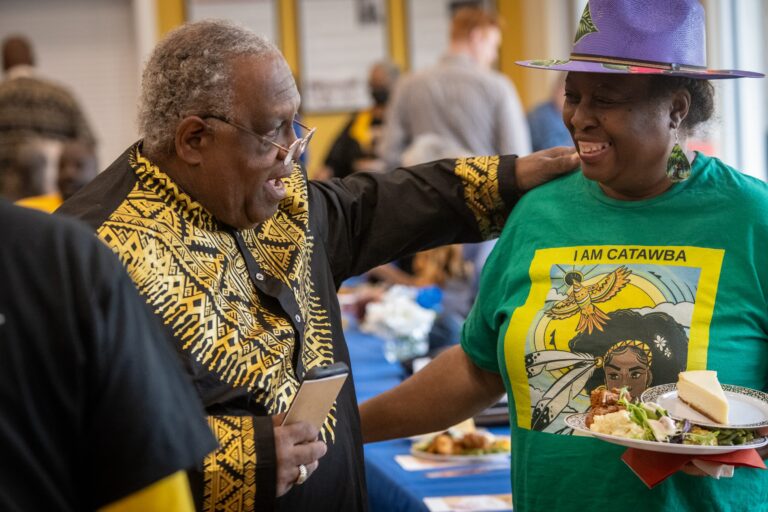
In the lobby, elders and youth greet each other with warm embraces before flowing into a bright, spacious meeting room, where a large stage and state-of-the-art audiovisual equipment signal that this is a place built to honor and amplify community voices. The walls hold artifacts of local history, and mannequins dressed in vibrant African garments stand watch in the corners. Joy and laughter echo through the space, mingling with the aroma of frying chicken, green beans and broccoli casserole.
This gathering place carries a long history — one that nearly slipped away.
Historic Rosenwald
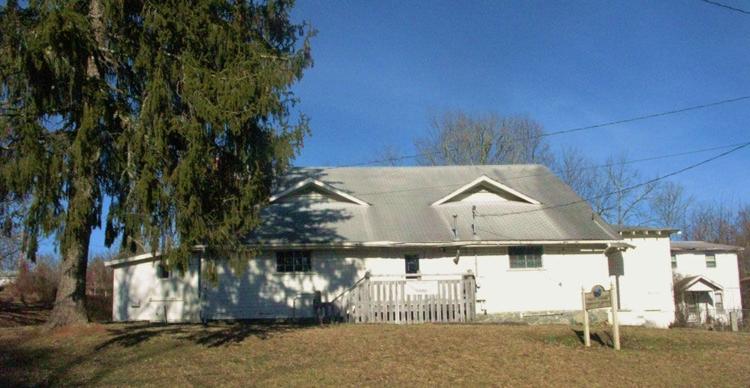
The Mary C. Jenkins Community and Cultural Center (“the Center”) sits in Brevard’s historic Rosenwald community, named for the Rosenwald School established here more than a century ago to educate Black children during segregation.
In 1942, local women created the community center to serve as a social and recreational hub for Black families. It offered a library, sports, parties, plays, dinners, dances and even a swimming pool. The building also held a carpentry center to teach woodworking skills and a daycare for parents who worked on the railroad or in the nearby tannery. Scout troops met there. So did the Boys and Girls Club.
After Brown v. Board of Education, as schools and businesses began to desegregate, fewer and fewer people relied on the Center. Over time, the building fell into disrepair and eventually closed its doors. The fire department burned it safely to the ground in 2018.
When the building was lost, so too was a gathering place for the community. That’s when Edith Darity stepped in.
An alumna of the Rosenwald School, Edith remembered the Center’s role in bringing people together. As a local historian, she had spent decades collecting records, photographs and stories from the area. She began working with a committee to consult city leaders and architects, raise funds and draft plans. Her daughter Karen Darity left her 22-year corporate career to help lead the effort.
In October 2022, a new, state-of-the-art building opened its doors on the same land as the previous center.
“I guess you could say I’m a visionary,” Edith says.
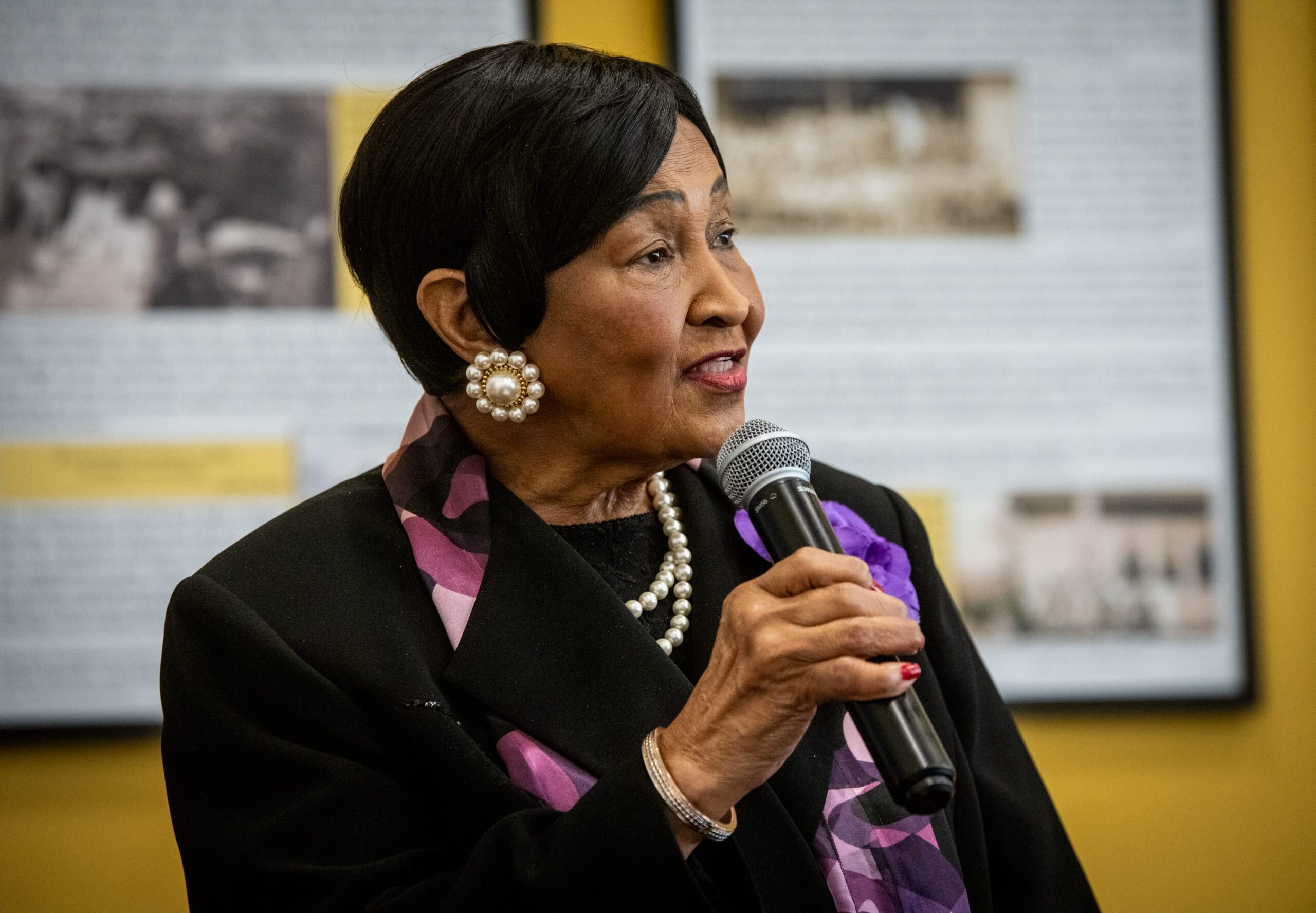
Edith knew that much of the community’s history lived not in archives, but in memory. So she launched an oral history project, pairing young people with elders to record their stories — often within their own families. Edith’s 17-year-old grandson, Wendel Darity, has interviewed her.
“The Center wouldn’t be here without her,” Wendel says.
He goes on to describe the sense of belonging the Center creates. “Me and my dad have done a youth group. A few of my friends and I invite different people, get to talk and know what everybody’s going through, so that helps the mental health side too.”
His aunt Karen, Edith’s daughter, emphasizes the importance of the work. “One day, the elders will no longer be here, and you can’t go back and ask them those important questions. There’s a way to bridge that gap through history and communication. Young people need to understand where their true identity and character come from through the stories of their elders, the grandparents, the aunties, and the people that helped raise them and help build their core values.”

Sharing Stories at the Symposium
That work of preserving and celebrating community history and culture now extends beyond Brevard.
This gathering, the “first annual” Western North Carolina African-American History Symposium, brings together communities from across the mountain region facing similar challenges: gentrification, erasure and the loss of cultural memory.
People from five counties converge on the Mary C. Jenkins Community and Cultural Center to enjoy a meal and share oral histories. Photo by Kate Medley
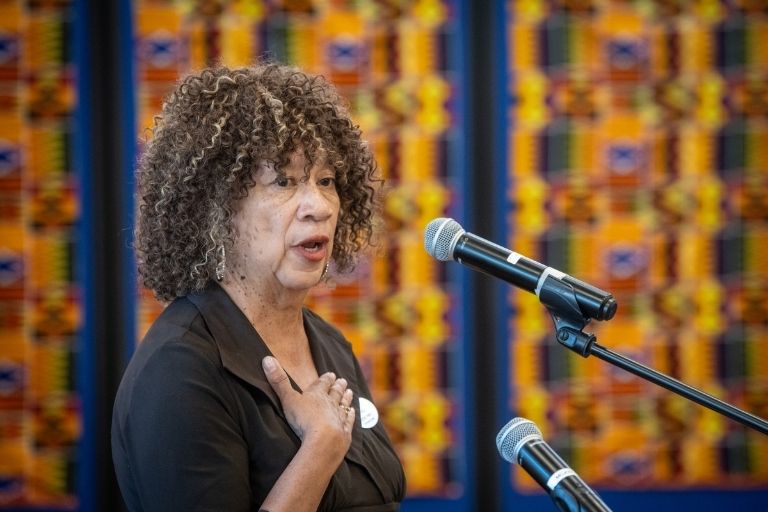
Kathey Avery, Founder and CEO of the Institute for Preventive Healthcare & Advocacy, sponsored and helped coordinate the event. Photo by Kate Medley
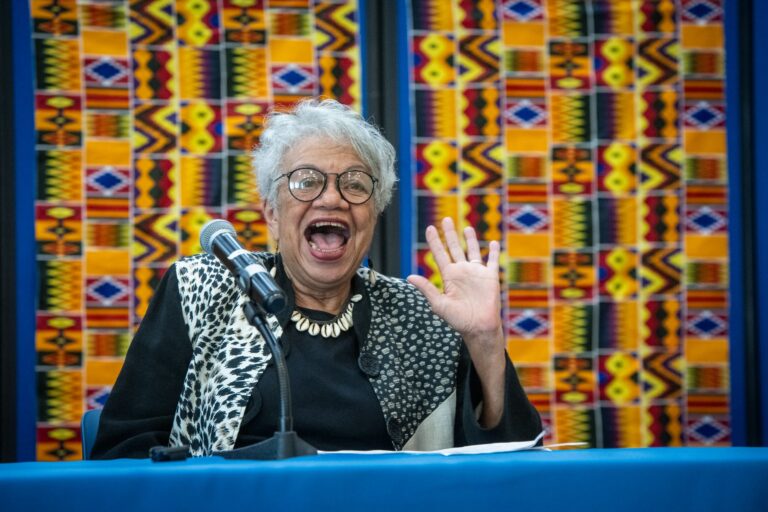
Researcher Anita White Carter helped secure Asheville’s Shiloh AME Zion Church on the National Register of Historic Places. Photo by Kate Medley
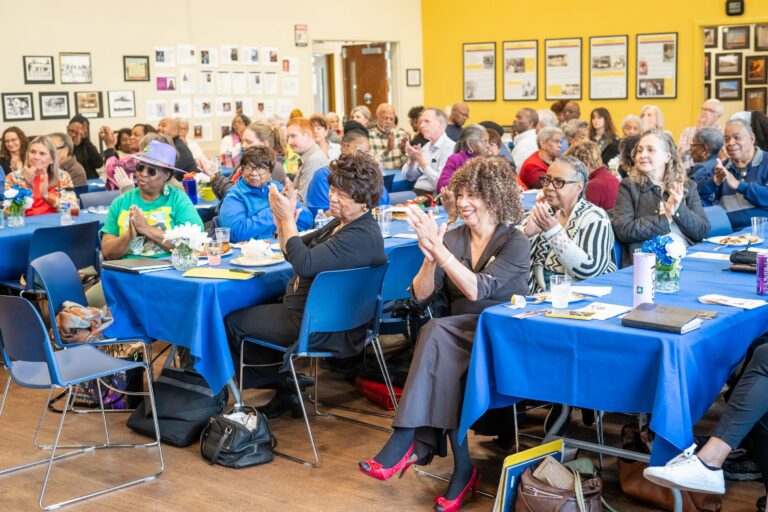
Attendees applaud and laugh as Western North Carolina historians bring family and community stories to life. Photo by Kate Medley
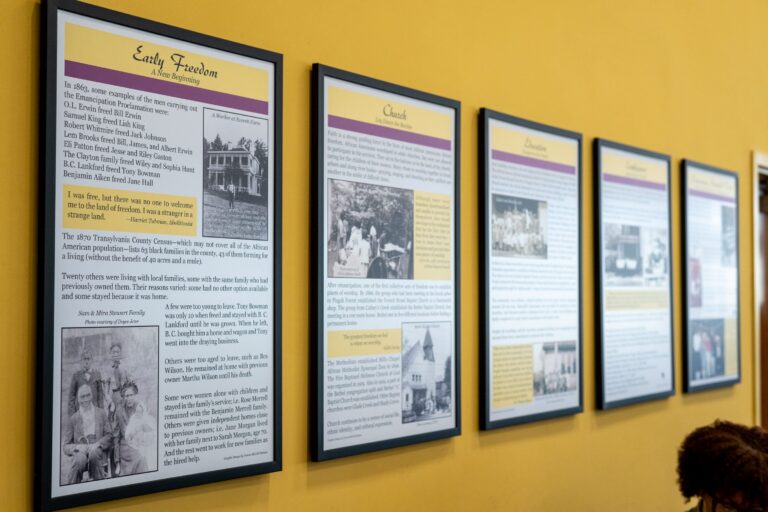
The walls of the meeting room detail the history of Transylvania County, the city of Brevard and the Rosenwald neighborhood. Photo by Kate Medley
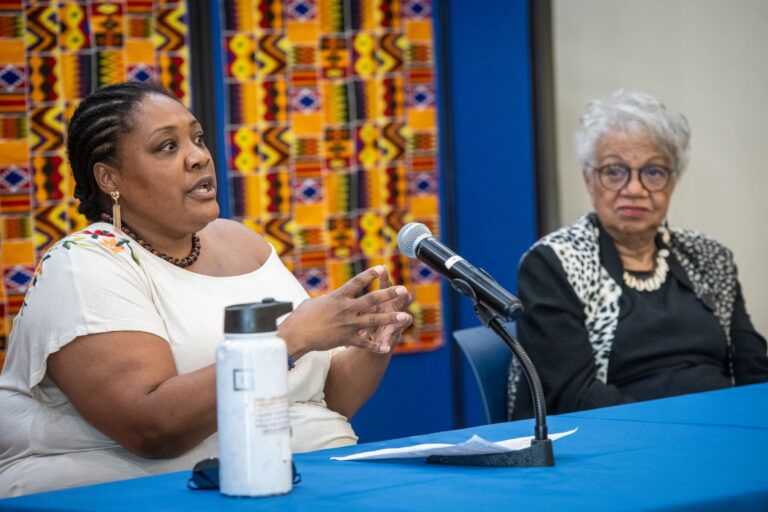
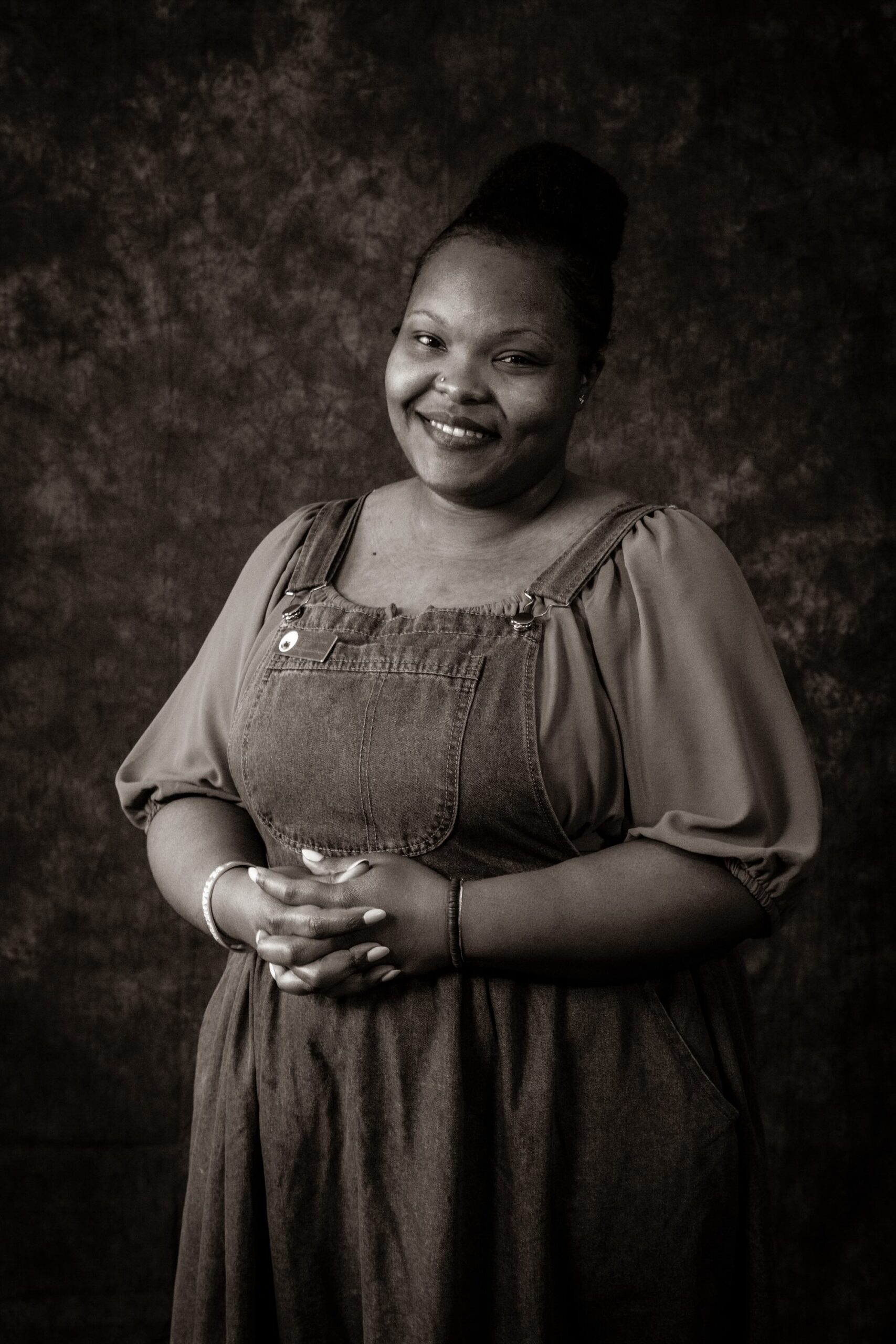
Tausha Forney is Program Director at the Pigeon Community Multicultural Development Center in Haywood County. Photo by Kate Medley

The Rosenwald neighborhood is named for the school where Black children studied during segregation. The Center honors educators. Photo by Kate Medley

In the Center’s state-of-the-art commercial kitchen, local caterers prepared a meal of fried chicken, veggies and cheesecake. Photo by Kate Medley
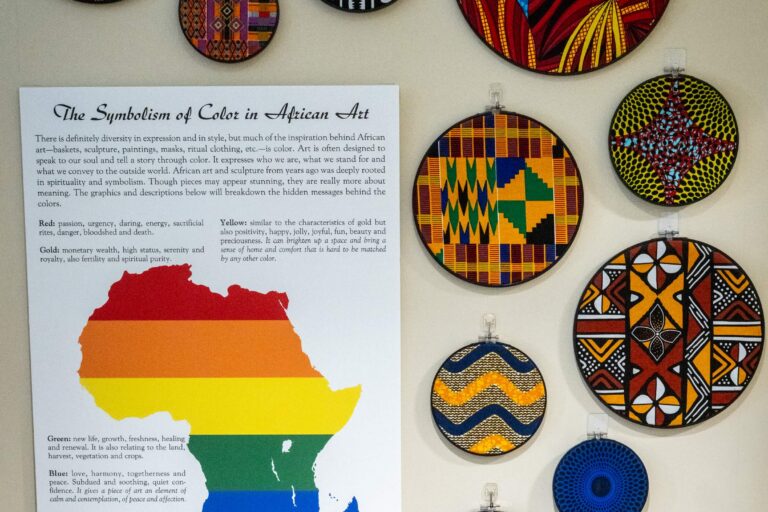
Vivid African fabrics and art tell stories with colors, symbolism and patterns. Photo by Kate Medley
“I wanted everybody to know we’re not alone,” Karen says. “Even though we’re small in number, we can still be unified in our goals — for our young people to be happy and thrive, even though their surroundings may look different.”
Historians from Cherokee, Henderson, Haywood and Buncombe counties have come to Brevard to share oral histories.
Poet Nicola Karesh, a native of Jamaica who called western NC home for nearly three decades, reads some of her verses:
Life is a prayer. Let me open to the wisdom of it.
There’s a feeling that everything I could possibly want is already right here for me.
It is simply a matter of opening to the beauty and the inherent wisdom of life.
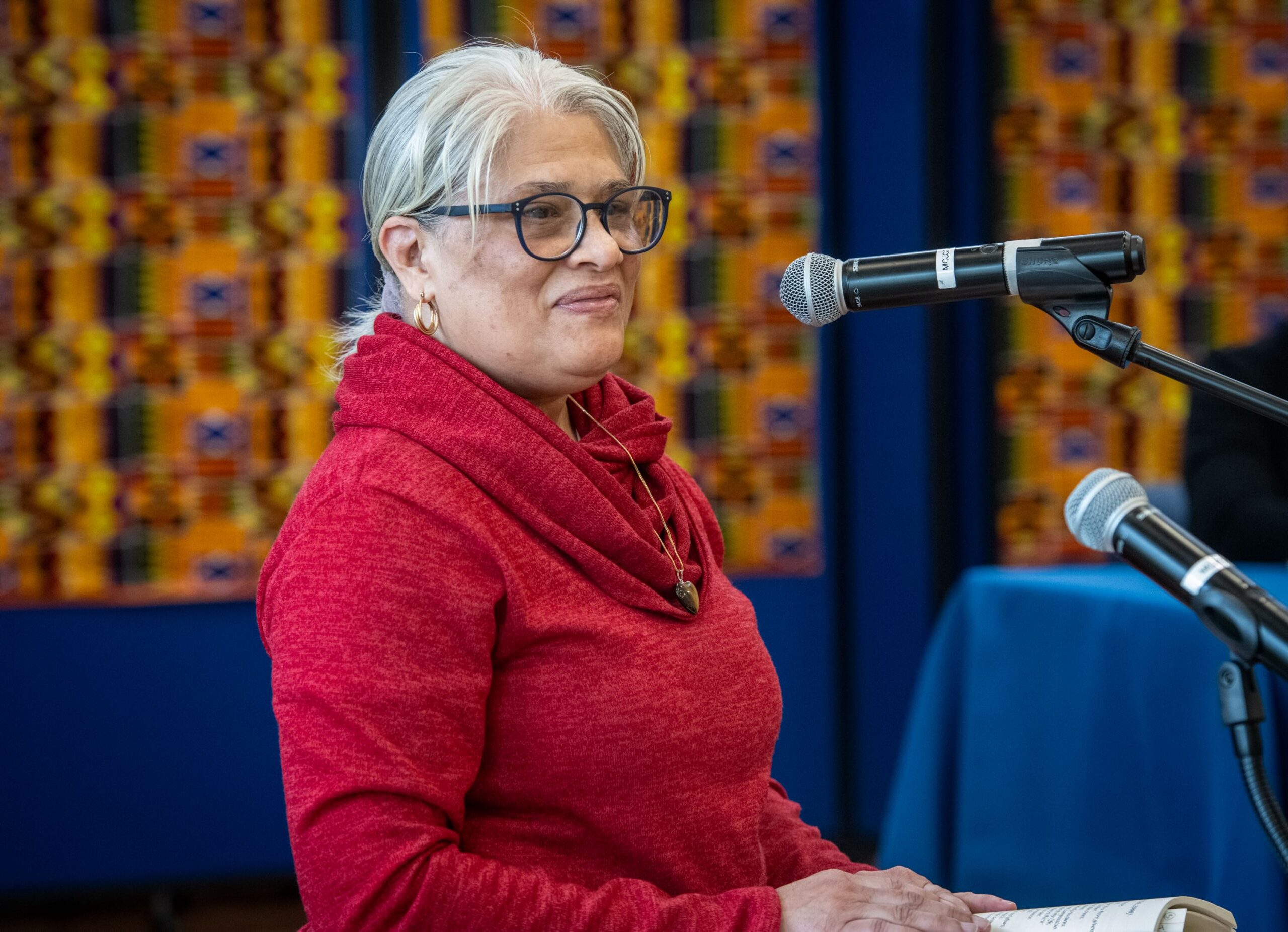
For several years, Nicola served as a liaison between the city and the Rosenwald Community, helping place historical markers and murals around Brevard.
“When I grew up in Jamaica, history was everywhere,” she says. “You could tell who the heroes were just by the artwork on the walls. Here, it felt like people didn’t know anything about Black history in Brevard. The history felt like it wanted to become visible.”
At the front of the room, Ann Miller Woodford shares the story of her birth during a snowstorm in rural Cherokee County. When a taxi couldn’t make it up the hill, neighbors carried the car up the driveway, loaded her pregnant mother inside, and carried it back down. The audience laughs.
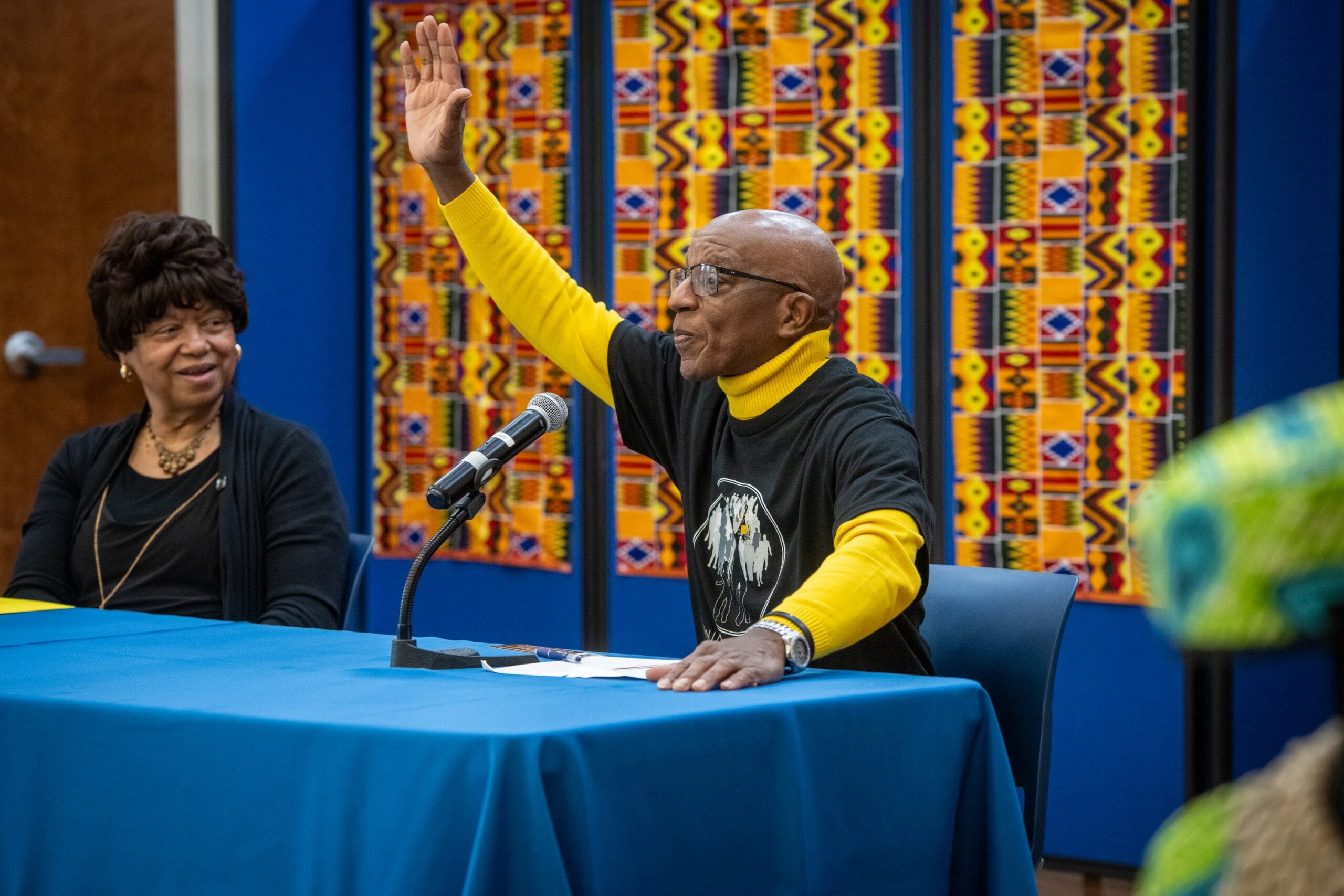
When it’s Ronnie Pepper Senior’s turn, he opens with a soaring rendition of “If You’re Happy and You Know It,” and the crowd merrily claps, stomps and sings along. Ronnie tells the audience about newly free Black people who, in the 1870s, built a thriving, self-sustaining community in Henderson County known as the Kingdom of the Happy Land.
“If people say ‘Appalachian,’ people think about poor, white people — derogatory things,” Ronnie says. “It’s not true. Black families have been here in these mountains for a long time. We’ve got a special gift. We’re read-up individuals, Black and white. We are strong, we’re courageous, and we can make a way out of no way. We want to show not only our community, but our state and our country, the contributions we’ve made.”
As speakers share their stories, common threads emerge: hope, determination, and neighbors caring for neighbors.
“The community was self-sufficient and looked out for each other,” Edith says. “If you had a garden, everybody ate. People shared what they had. They were independent. They worked hard. They educated their children the very best they could. And it was a wonderful place to live.”
Putting the Puzzle Pieces Together
Each participant at the symposium brings cherished stories to share.
Edith beams as she describes her own family history, which she has meticulously documented. She comes from a long line of industrious women who ran businesses and hosted Black visitors to Brevard.
“I remember as a child setting tables at my great-aunt’s boarding house,” she says. “When I think of Southern Living magazine, I think of her because that’s the way she cooked and served and had the table looking when the boarders would come back in the evening. It was beautiful.”
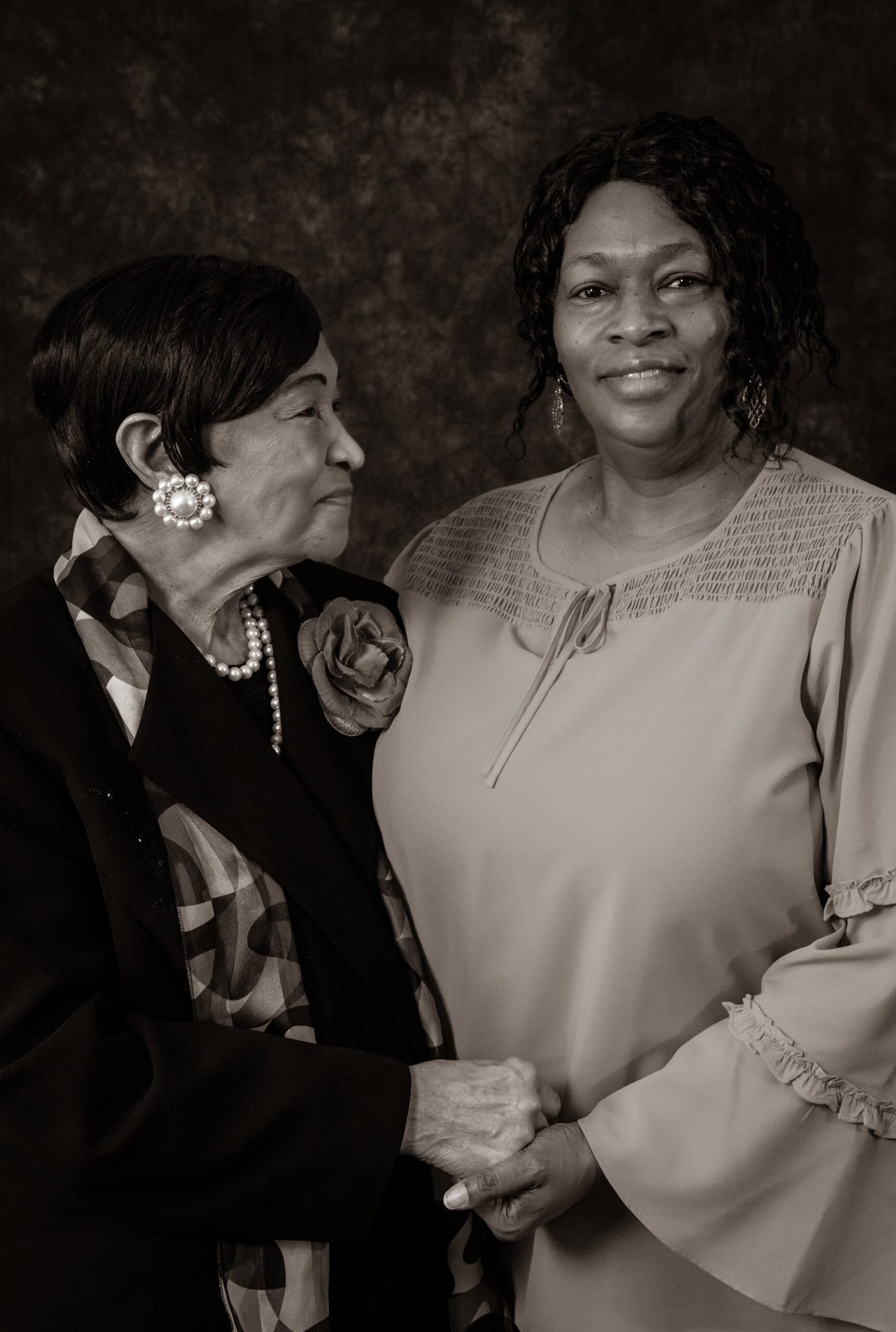
Edith and Karen Darity. Photo by Kate Medley
Board Vice President Reverend Victor Foster also grew up at the original community center. “We had a swimming pool. I learned how to swim because people would throw money in the water.” He learned to play bass guitar there, too. Today, he plays in a band called Groove Therapy.
“We want people to understand what Black history really means to them,” he says. “It’s not something that was written in a book just to read. This is who you are.”
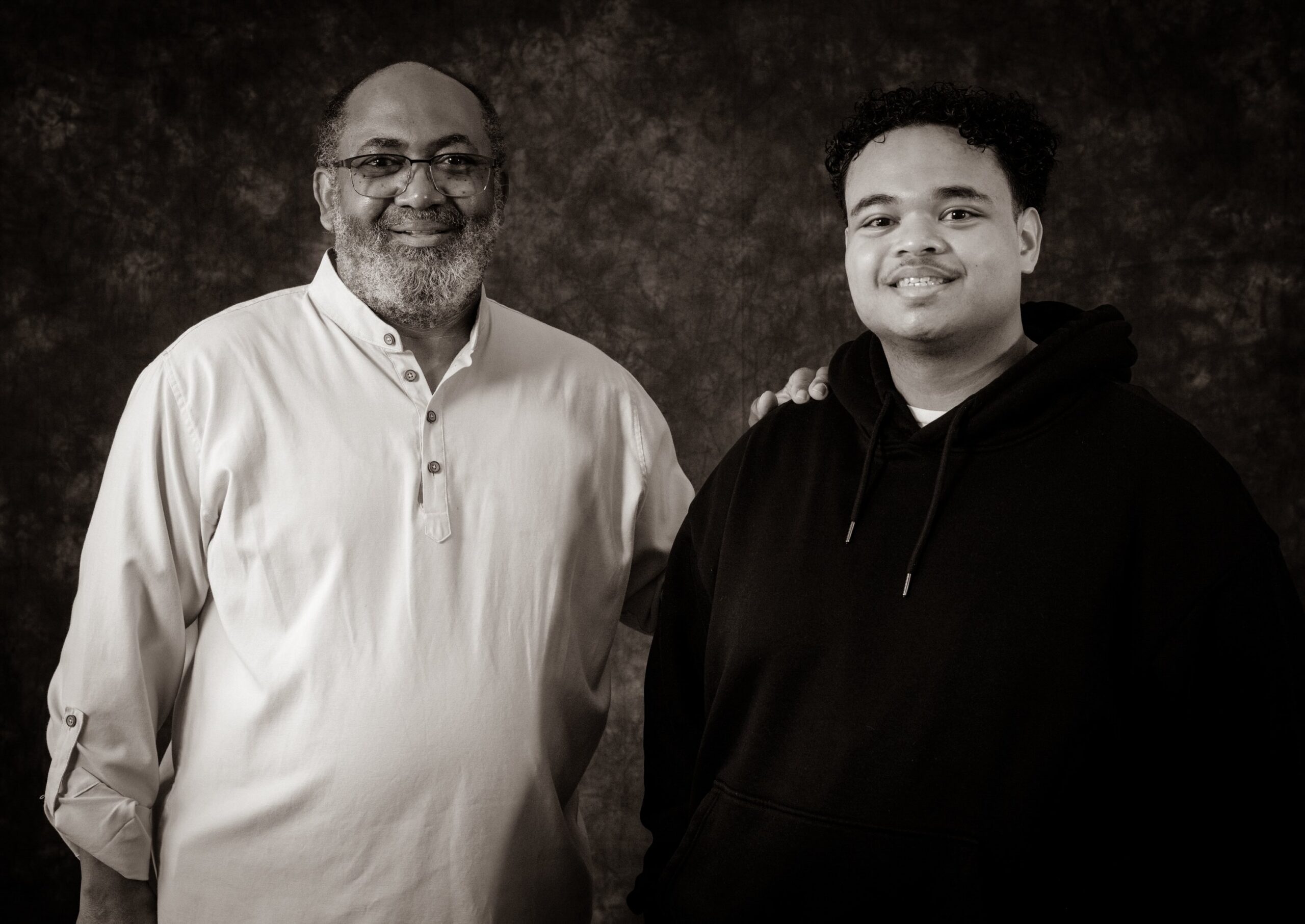
Victor’s son Cyril Foster is part of a younger generation piecing that history together. He says he’s learned a lot from his father and other elders in town.
“I’m learning about the history of the area, and working with [my dad] helps me put the puzzle pieces together of what used to be instead of what I see now,” Cyril says. “The African-American community here has shaped everything from small businesses to the workforce to art and culture and sports. It’s really cool to say to somebody, ‘I’m from Western North Carolina, from the Brevard area.’ I get to explain to them, ‘This is my history. This is where I come from, and this is my home.’”
“This is my history. This is where I come from, and this is my home.”
– Cyril Foster
One visitor, Shaniqua Samuel, works to prevent displacement in Asheville’s historic Shiloh neighborhood, where gentrification has pushed out Black families who lived there for generations.
“Part of my role is to make sure people don’t lose their homes, like my granddaddy did,” Shaniqua says.
Shaniqua is grateful to the Daritys for organizing the symposium. “Even though I don’t know everyone here, their stories align with mine. There’s a common thread that can’t be cut. It’s important to keep us together, because there are so many systems in place that would divide us if we let them.”
Dr. Matthew “Doctor Matt” Gilligan, a community center board member, traces his path back to a childhood swim instructor who helped him build confidence. The instructor was a Black man who was also a scuba diver, and he introduced Matt to the wonders of the ocean. Matt went on to earn a PhD in marine biology and teach at a historically Black college before retiring to Brevard.
When he discovered the Rosenwald School and the Center, he began documenting its history through photography. Today, he teaches classes and is helping digitize Edith’s archives.
“This is a museum of living history,” he says.
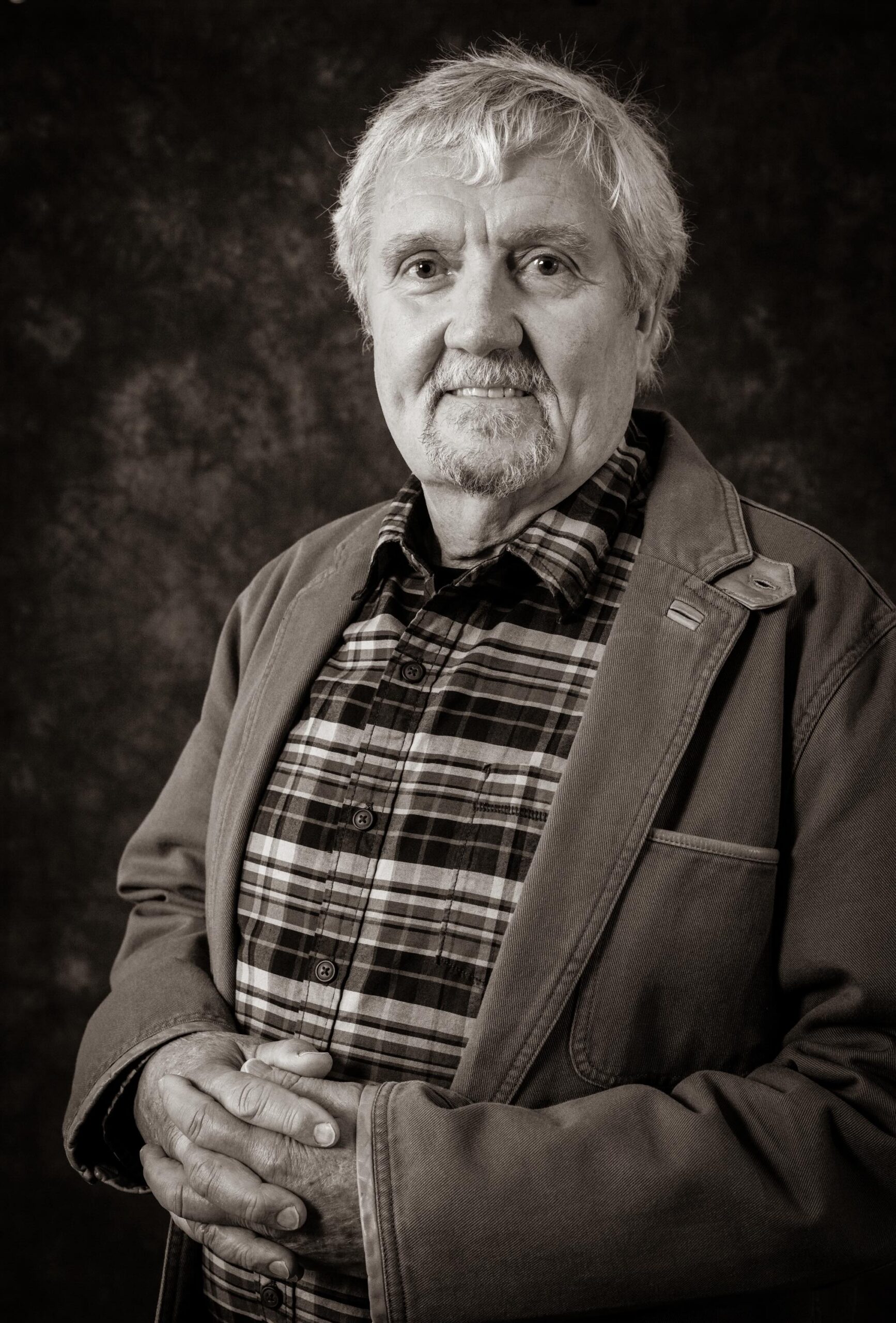
Victor Foster points out that the Center is not only preserving and celebrating local history, but actively shaping community life today — hosting events like health fairs, college information nights for youth and celebrations throughout the year.
The community center’s Juneteenth block party is legendary, as seen in this video, and people come from other states to celebrate:
“Each year we build and build on it,” Karen says. She details the plans for this year: the guest speakers, the trolley history tour, the live music and the soul food seafood dinner. The three-day celebration is open to the public and free of charge.
That blend of history and action is shaping how the next generation imagines the future of these mountains.
Sharing the Love: The Future of these Mountains
In Brevard, the future isn’t abstract — it’s being shaped by young people turning their connection to the past into a vision for what comes next.
“History will repeat itself if you don’t know it,” Wendel reasons. “Things will either become a shell of what they once were, or they’ll be better than they were before.”
Wendel imagines new spaces for young people in Brevard to gather and connect, like a trampoline park and a go-kart track.
Cyril hopes for shared prosperity in these mountains.
“The area is growing and infrastructure is coming in. Western North Carolina is in this transitional period. It’s a tourist economy now. What does that mean for us, the people who live here? I’d like to see that growth benefit the African-American community and people of color too.”
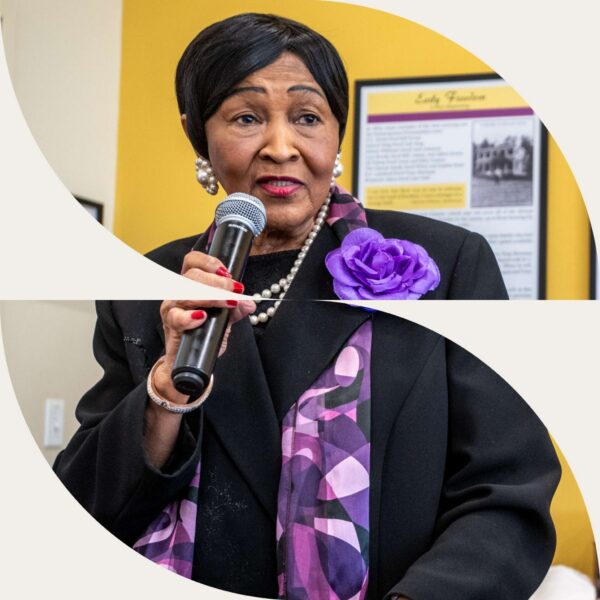
“When people come here, I hope they feel that love.”
– Edith Darity
As for Edith, the self-described visionary, her hope is simple:
“I would like to see more unity in the area. The reason we have a lot of negativity is because we don’t know each other. We’re more alike than we’re different. We have heart, we have love, and even though a lot has happened through the years that really hurt people, we must share love. That’s the most important thing. We can demonstrate that right here. When people come here, I hope they feel that love.”
More News + Stories
ZSR Awards $1.7 Million to 34 Community Projects in Rural NC
During our May board meeting, the ZSR Board of Trustees awarded 35 grants totaling $1.7 million to organizations working for local progress in rural communities across North Carolina.
Read MoreZSR Awards $1.4 Million to Rural NC Organizations Working for Local Progress
During our May board meeting, the ZSR Board of Trustees awarded 35 grants totaling $1.4 million to organizations working for local progress in rural communities across North Carolina.
Read MoreZSR Awards $1.4 Million to 33 Organizations Working for Local Progress Across NC
During our May board meeting, the Z. Smith Reynolds Foundation (ZSR) Board of Trustees awarded 33 grants totaling $1.4 million to organizations working for local progress in communities across North Carolina. The new grants are part of ZSR’s Community Progress Fund strategy. The funded projects span the state, from Macon County in the far west…
Read More English
  Español